
Zagreb Unveils Mural Honouring Goran Bare
A new mural dedicated to Croatian rock musician Goran Bare has appeared in the heart of Zagreb, bringing together music, street art and personal memories. Created by his cousin, artist Boris Bare, the tribute draws inspiration from some of the best-known songs by the band Majke and carries a deeply personal message about life, love and remembrance. The artwork was painted on a building owned by the Catholic Church, with permission granted by a local priest.
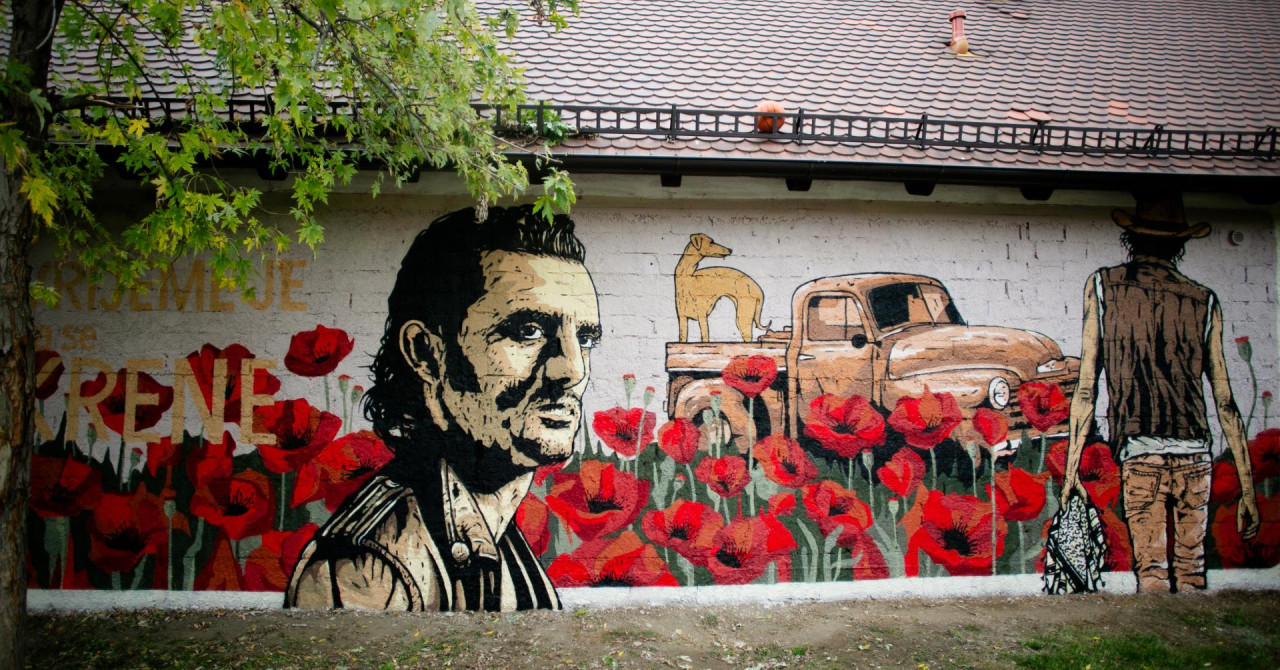
A colourful new mural honouring Croatian rock musician Goran Bare has become a distinctive addition to Zagreb's historic city centre. Located in Opatovina, the artwork was created by Boris Bare, an illustrator and street artist who is also a relative of the celebrated musician. Titled Bare Baretu, the mural transforms familiar imagery from the music of Majke into a visual tribute that reflects the singer's artistic legacy and the personal connection between the two men.
The project carries particular significance because of its unusual location. Rather than appearing on a conventional public wall or designated street-art surface, the mural was painted on a building belonging to the Catholic Church. Boris Bare told Jutarnji list that he received permission from a priest before beginning work, allowing the tribute to become part of the surrounding urban landscape.
Since its completion, the mural has attracted attention from passers-by, including people with personal memories of the musician and younger visitors who recognise the songs referenced in the artwork. For Boris, the response has given additional meaning to a project that began as a personal expression of admiration for his cousin.
A Musical Journey Inspires a Personal Tribute
The idea for the mural emerged during a long journey from Madrid to Croatia, when Boris Bare spent much of the drive listening to songs by Majke. The experience brought back memories of his relative and gradually inspired the images that would become central to the composition. Although the two men shared a family connection and mutual respect, Boris has acknowledged that they did not spend as much time together as he would have liked.
Music provided a way to express that relationship. As he listened to Majke, Boris began imagining a landscape of red poppies inspired by the band's song Daj mi. The imagery developed into a broader composition exploring love, the passage of time and the memories people leave behind. Rather than creating a traditional portrait, he chose to combine symbolic elements that would be immediately recognisable to fans familiar with Bare's music.
The mural features an expansive field of poppies, with the central figure of Goran Bare depicted from behind as he walks into the distance. An old automobile, reminiscent of the vehicle appearing in the music video for Daj mi, adds another connection to the singer's visual and musical world. Together, these elements create a scene that invites viewers to reflect on the relationship between memory, personal experience and artistic expression.
Another distinctive feature is the appearance of Višnja, Boris Bare's adopted mixed-breed dog, who frequently appears in his artwork. Her presence is also a reference to Mršavi pas, another song associated with Majke. By incorporating an element of his own artistic identity into the tribute, Boris creates a connection between his work and the music that inspired it.
The Meaning Behind “Vrijeme je da se krene”
One of the most prominent elements of the mural is the phrase Vrijeme je da se krene, displayed in large letters on the left side of the composition. The words reference one of Majke's best-known songs, released in 1996, whose message has continued to resonate with listeners across different generations.
The title can be translated into English as It's Time to Move On or It's Time to Get Going, depending on the context. For Boris Bare, the phrase carries a message that extends beyond its original musical setting. He hopes it might encourage someone passing the mural to make a positive change in their life, reconnect with loved ones or offer assistance to another person.
The song has also acquired a broader cultural significance over the years. Although it was not originally written as a political statement, Vrijeme je da se krene became associated with the Croatian opposition movement around the parliamentary elections of January 2000, when a coalition led by the Social Democratic Party came to power.
Its use in different contexts demonstrates how music can acquire new meanings long after its release. Within the mural, however, the phrase serves primarily as a personal and artistic message, inviting viewers to consider their own circumstances and the possibility of change.
This combination of music and visual storytelling is central to the work. Rather than reproducing lyrics simply as decoration, Boris has incorporated the song title into a composition that encourages viewers to interpret its meaning through their own experiences.
A Church-Owned Wall Becomes a Canvas for Rock Music
The location of the mural adds another interesting dimension to the project. Opatovina is part of Zagreb's historic Upper Town surroundings, an area characterised by older buildings, narrow streets and public spaces that attract both residents and visitors. Placing a contemporary street-art tribute in this environment creates a contrast between the city's architectural heritage and the cultural influence of modern Croatian rock music.
The fact that the wall belongs to the Catholic Church has attracted particular attention. According to Boris Bare, a priest granted permission for the artwork, allowing him to complete the project without the uncertainty often associated with unauthorised street art. The arrangement demonstrates how cooperation between property owners and artists can create opportunities for public cultural expression.
The mural has also generated personal reactions from people who encountered Boris while he was working. One woman approached him and recalled having known Goran Bare and his former wife through her professional work as a doctor. Her memories created an unexpected connection between the artwork and the musician's personal history.
Another encounter involved a young couple who explained that they had spent considerable time in the nearby park during their childhood. They welcomed the choice of location, expressing appreciation that a tribute to Bare had been placed in a setting with which they already had a personal connection.
These responses illustrate how public art can become more than a visual addition to a neighbourhood. A mural can create conversations, revive memories and connect people through shared cultural references, particularly when the subject is an artist whose music has been part of their lives.
Goran Bare's Influence on Croatian Rock
Goran Bare has long been one of the most distinctive figures in Croatian rock music. As the frontman of Majke, he developed a reputation for emotionally intense performances, uncompromising musical expression and lyrics that explore themes including personal struggle, love, alienation and resilience.
The band's music became especially influential during the 1990s, when Croatian rock was undergoing substantial changes amid wider social and cultural developments. Majke established a recognisable sound rooted in blues rock, garage rock and raw guitar-driven arrangements, with Bare's distinctive voice and stage presence becoming central elements of their identity.
Songs such as Vrijeme je da se krene, Daj mi and Mršavi pas helped establish a lasting connection with audiences, while the band's recordings continued to reach new listeners through concerts, radio broadcasts and digital platforms.
Bare's artistic legacy is also closely associated with his willingness to address difficult personal experiences through music. His performances have often been described as emotionally direct, reflecting a style that prioritises sincerity and intensity over conventional showmanship.
For Boris Bare, that body of work provided a rich source of visual inspiration. By transforming familiar musical references into images, the mural offers fans a different way to engage with songs they may have known for decades.
The project also demonstrates how an artist's influence can extend beyond their original medium. In this case, rock music becomes the foundation for a piece of public art that combines family memory, symbolic storytelling and contemporary street-art techniques.
A New Cultural Landmark in Zagreb
The completed mural adds another creative element to Zagreb's increasingly diverse street-art landscape. While large-scale murals have become familiar sights in various parts of the city, Bare Baretu stands out because of its personal background, carefully selected musical references and location within the historic centre.
Its visual composition encourages visitors to spend time examining the details rather than treating the artwork as a conventional portrait. The fields of poppies, the distant figure, the old car and Višnja's presence each contribute to a layered interpretation that becomes more meaningful when connected with the music of Majke.
For fans of Goran Bare, the work offers a recognisable tribute to an artist whose songs have shaped Croatian rock culture. For visitors unfamiliar with his music, the mural may provide an introduction to an important figure in the country's cultural history.
Boris Bare has described the project as a modest personal contribution compared with the influence his cousin has had through music. That sentiment captures the central purpose of the work: to create something lasting and accessible that expresses gratitude through visual art.
The new Goran Bare mural in Opatovina is more than a tribute to a celebrated rock musician. It represents a personal connection between two artists, a visual interpretation of songs that have influenced generations and an example of how Zagreb's public spaces can preserve cultural memories. Through Boris Bare's artwork, the music of Majke has found a new form of expression in the heart of the Croatian capital.